Revenue Analytics for Hotels: Single Source of Truth for Commercial Performance
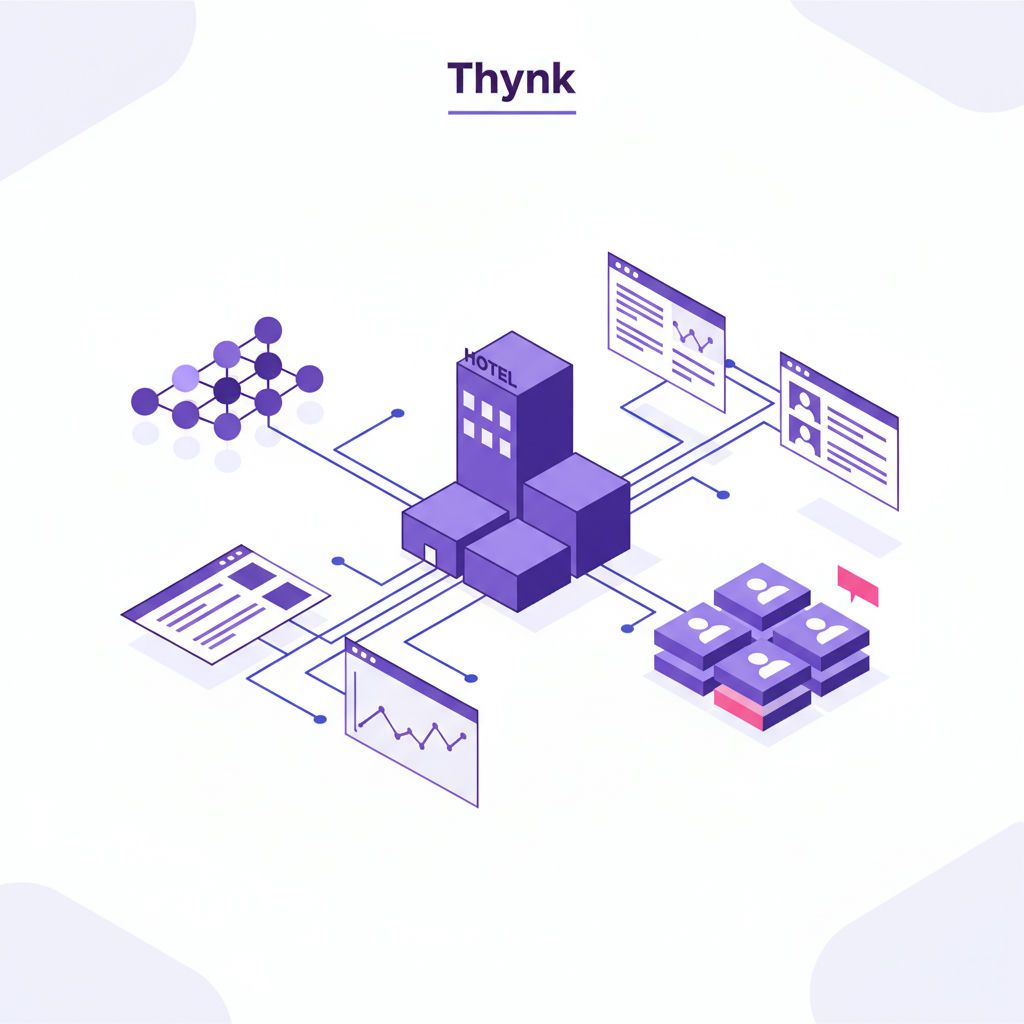
Revenue analytics in hospitality collapses PMS actuals, CRM pipeline, and room-block pickup into a single reporting layer inside Salesforce. Thynk delivers this as native architecture—not a dashboard bolted onto fragmented systems—so finance, sales, and revenue management read from the same ledger. This architecture inherits the Einstein Trust Layer for governed AI, enforces daily GL parity through PMS connectors, and uses account hierarchy to attribute contribution correctly across corporate buyer, intermediary, property, and tour brand. The result: version-control chaos and reconciliation meetings disappear, replaced by forward-looking visibility operators need to allocate capital and adjust rates with confidence.
Why hospitality demands unified revenue visibility
Hotels operate on simultaneous revenue streams that resist simple accounting. A property sells transient rooms nightly while managing group blocks committed months in advance, event space tied to F&B minimums, and catering contribution that may post to a different revenue centre. This creates four datasets that rarely align:
Transient and group actuals posted in the PMS, segmented by rate code and channel but frozen at yesterday's close. Group pipeline still negotiating in the CRM, carrying probability weights and expected conversion dates but not yet revenue. Room-block pickup—contracted inventory released but unconsumed—which lives in neither system but holds real future value. Event and catering margin tied to the same account, often documented in separate banquet event orders and sometimes separate P&L lines.
When these streams fragment across systems, finance pulls PMS exports, sales defends CRM Opportunity totals, and revenue management reconciles variances in a third BI tool. Each function forecasts from its own dataset. Weekly revenue calls become reconciliation exercises, not strategic conversations.
Thynk approach: platform architecture, not reporting tools
Thynk treats revenue analytics as foundational platform logic, not a dashboard layer. The system delivers visibility through four architectural decisions:
Daily GL parity through native PMS integration
Opera, Mews, Stayntouch, and Protel connectors push nightly revenue, rooms sold, ADR, and segment mix into Salesforce objects every morning. Data arrives as standard records—not ETL'd into a warehouse—so Einstein AI, Agentforce agents, and user reports consume the same ledger with no latency. This eliminates the multi-day lag that plagues batch workflows and ensures rate recommendations operate on current data. See how PMS integration works for technical detail.
Account-hierarchy roll-up for true buyer attribution
A corporate travel manager negotiates a national rate and books through a regional TMC. Revenue posts at property level but rolls up to the parent corporate account and the TMC agency account. Thynk's B2B CRM for hotels enforces this parent–child–property hierarchy so operators measure ROI by true buyer, not booking channel. This reveals which accounts justify investment and which intermediaries deliver margin, not just volume.
Unified pipeline and pickup in PACE reporting
Group Opportunities carry room-block quantity, contracted rate, and pickup velocity. Analytics surfaces forecast revenue—weighted pipeline plus committed blocks—alongside PMS actuals in a single PACE view. Sales compares last-year actuals against this-year pipeline and contracted blocks for the same future window, replacing the two-spreadsheet reconciliation workflow with a single screen. Forecast accuracy improves because everyone measures the same future position.
Segment and source contribution analysis
Every Opportunity and PMS booking carries source (Cvent RFP, GroupSync, direct email, marketplace), segment (corporate, association, SMERF, social), and owner. Analytics breaks out contribution margin by source, segment, and sales rep. Leadership allocates marketing spend, shifts lead-routing rules, and retires underperforming channels with evidence instead of opinion. Learn more in Hotel Sales Analytics.
Governed AI for anomaly detection and rate alerts
Einstein Trust Layer monitors pickup velocity, identifies accounts that cancel late, flags rate compression when group blocks consume transient inventory, and alerts revenue managers to re-price or release. Insights appear inside the same environment teams already use—no separate login, no API bridge, no latency. Governed AI means recommendations are auditable and traceable, critical when a single rate decision affects thousands of room nights.
Example: Multi-property operator with centralised GSO
A boutique brand operates eight properties across four cities, each with independent GM and revenue manager, plus a centralised Global Sales Office handling national corporate and tour accounts. Before Thynk, the GSO relied on monthly PMS exports and emailed pipeline summaries from property teams. Forecasting consumed three days of spreadsheet consolidation every month.
With Thynk, the GSO director opens a PACE dashboard showing actual revenue, weighted pipeline, and contracted room nights for all eight properties, segmented by account hierarchy. A national pharma account with bookings at five properties appears as a single parent; each property's revenue rolls up automatically. Einstein flags that two properties run 18% behind last-year pace for Q3 group definites, prompting GSO to route additional qualified RFPs to those properties.
Weekly forecast calls shrink from 90 minutes to 30 because participants read from the same dataset. Forecast variance drops from 14% to 5%. The brand reallocates marketing spend toward source channels delivering highest margin per room night, not highest volume.
Revenue analytics and Agentforce
Agentforce agents consume revenue analytics to improve qualification and routing. An RFP triage agent checks historical contribution from the requesting account, flags low-margin or high-cancellation risk, and adjusts probability scoring. A proposal agent populates rate recommendations based on forward demand from the analytics layer, not yesterday's static table. A forecast agent (future roadmap) summarises weekly pipeline movement, identifies the three accounts most likely to convert this month, and drafts a natural-language memo for the revenue call.
Because analytics sits inside Salesforce, agents inherit governance, auditability, and trust-layer controls—no separate warehouse or API bridge. Read more in AI Agents for Hospitality.
Integration with PMS: the parity requirement
Analytics depends on PMS integration that delivers financial parity, not reservation counts. Thynk's native connectors synchronise nightly revenue by market segment, rate code, and room type; guest-nights, ADR, and RevPAR; group master folios and individual reservation breakout; cancellation and no-show revenue adjustments. Integration runs daily, so reports reflect last night's postings. This eliminates lag and ensures AI-driven recommendations operate on current data, not stale snapshots.
Strategic outcomes
Unified revenue analytics removes structural friction and changes what operators optimise for.
Forecast accuracy improves from 10–15% variance to sub-5% by aligning sales, finance, and revenue management on a single dataset. Weekly revenue calls shrink by half when reconciliation disappears. Source ROI transparency allows operators to allocate marketing spend and lead-routing rules based on contribution margin by channel, not volume. Account expansion velocity increases because operators identify high-value corporate accounts booking only one property and route them multi-property RFPs. Governed AI recommendations for rate adjustments, lead scoring, and pickup alerts arrive without separate BI licensing or API latency.
Thynk is the Salesforce-native commercial platform for hospitality. Revenue analytics is core architecture, not a bolt-on layer—giving hotel operators the same forward-looking visibility, governed AI, and unified reporting that enterprise SaaS companies have relied on for a decade. For hotels moving from legacy event-management tools or spreadsheet-based group sales, explore alternatives to legacy systems to understand how Salesforce-native architecture changes what's possible.